From two identity roles to a finished portrait
Start by choosing the people, because the two roles are not interchangeable. The first identity is the person whose face appears in the tattoo. In the two-photo version the second image establishes the person turned away from the viewer. With one selfie, the recipe invents that partner instead.
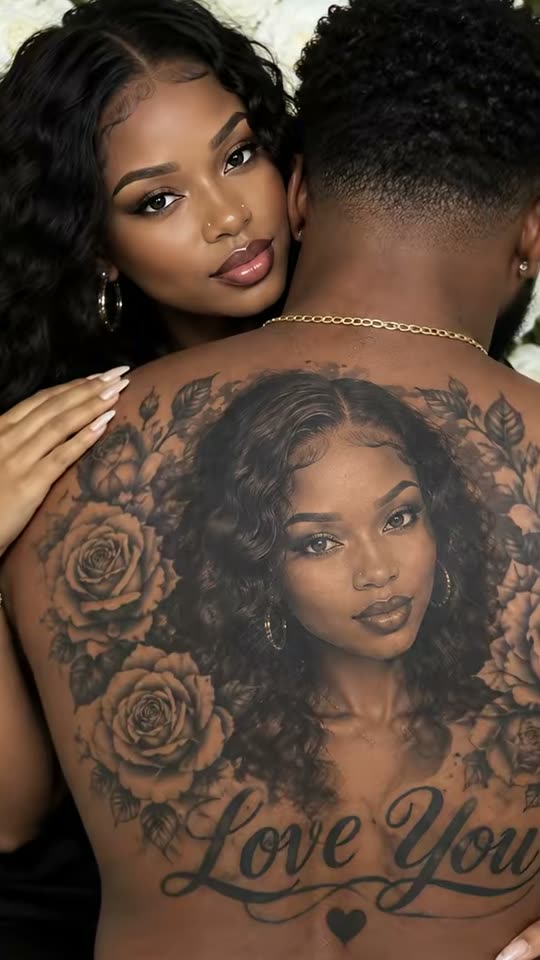
The finished composition combines the embrace, the back portrait and a soft rose setting into one image. Inspect all three parts: a recognizable face outside the tattoo, a matching shaded face inside it, and a sensible body arrangement around the hug. You can place the image beside a real couple photograph in a post, but do not imply it documents actual ink, an actual pose or an event you physically photographed.
What the built-in image recipe controls
The key instructions are about identity and composition, not simply adding a tattoo sticker. The scene needs a partner facing away, the other person embracing them, and a portrait that repeats the correct face in a different visual medium. The shaded tattoo and floral decoration should look integrated with the back rather than pasted over the whole image.
Smew already includes those directions. You do not need to copy a creator’s long prompt or their personal descriptions of a partner. The photo slots determine the identities. A name, exact script style or new tattoo concept is not an exposed customization control on this page. Treat lettering as a generated detail to inspect, not text that is guaranteed to be spelled perfectly.
Choosing an invented partner or your own
Your face is useful for trying the romantic concept with one identity. The partner is generated, so the result should not be presented as a photograph of a real relationship. A new generation may interpret that invented person differently; it is not a fixed character selection.
Both of you is for a specific consenting pair. Slot one identifies the portrait, and slot two identifies the person whose back carries it. If you want the opposite role assignment, make that choice in the upload order. Both versions create the same listed image size for the same credit price. Choose by the identity control you need rather than assuming the two-photo version is a separate paid enhancement.
When the tattoo face, back or lettering goes wrong
The tattoo portrait has to remain recognizable after being reinterpreted as shaded ink. A low-detail or side-facing selfie makes that harder. Choose a clear frontal image before trying to correct the result with another run. For the back-carrying partner, a source with visible hair and shoulders can help retain recognizable appearance from behind.
Check body positions, the embrace and every word in the image. AI can produce extra lettering, an unexpected face angle or a portrait that resembles the wrong subject. Do not publish simply because the rose background looks attractive. This is a mood image rather than a ready-to-tattoo stencil; a professional artist should create an appropriate original design if you later want real ink.