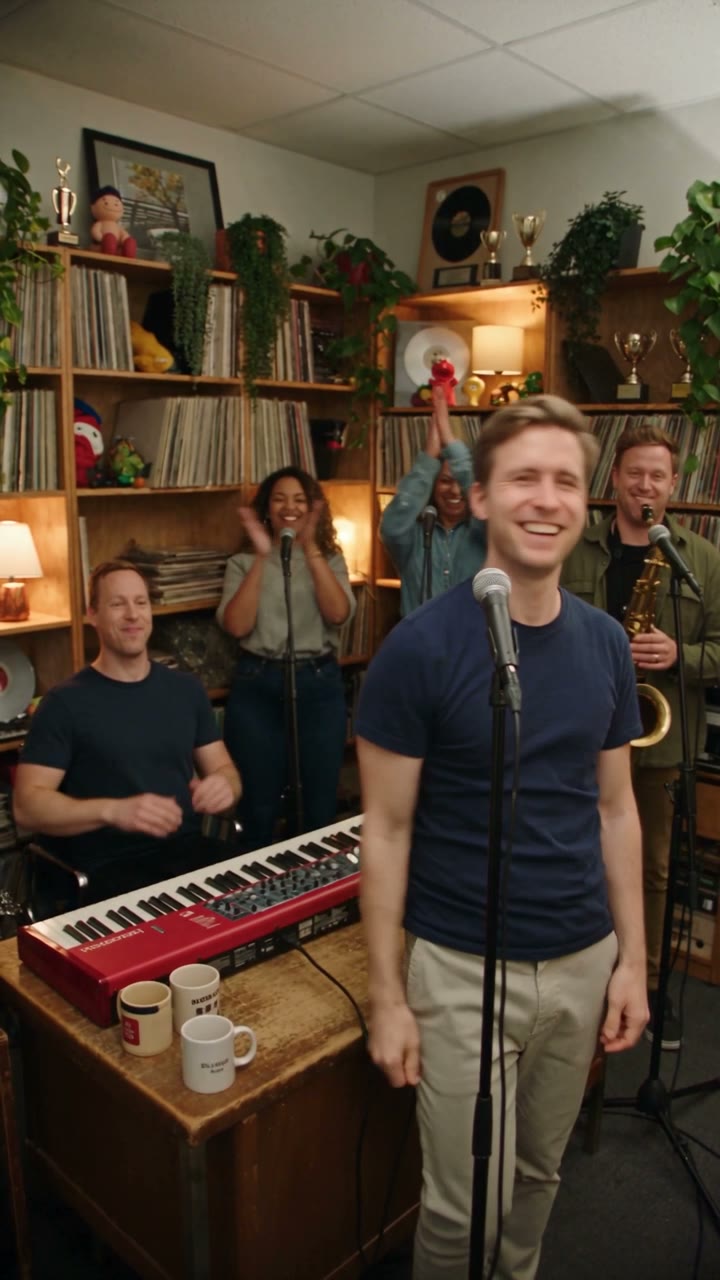
A short session with a surprise sax moment
The setting is deliberately close: a desk, bookshelves, records and warm room detail crowd the performers into a small concert space. The lead begins at the microphone, leaning into an expressive note before a laugh-like reaction and hand gesture make the performance feel playful rather than solemn.
The sax passage redirects attention. In You, that player is generated; in Duo or Band, the second uploaded adult is intended to become recognizable at that moment. Band also gives the third adult a keyboard role. The final group gesture closes the session without requiring a full-length song.
The current take is 10 seconds at 720p in vertical 9:16. Seedance generates the scene and audio, with a soul or funk-like performance direction rather than an exact attached recording. Faces, hands, instruments and precise musical timing can vary, so review the solo as well as the lead's opening close-up.
One star, a sax-playing friend or three named bandmates
You is the simplest cast: one uploaded adult sings lead with generated musicians around them. Duo makes the sax reveal personal by supplying a second recognizable adult. Band adds the keyboard identity through a third photo. The recipe still aims for five performers, with fictional bandmates filling the other positions.
Each current choice costs 126 credits and shares the same 10-second output. Choosing Band does not create five user-controlled identity slots, and a large group photograph cannot add more. Use the labeled order to decide who receives the microphone and instruments.
No performance recording is required from the participants. The result imagines them playing and singing, so it is not evidence of actual musical ability or a real office concert. Confirm that everyone enjoys the role assignment before sharing a group-chat or workplace joke, and keep the AI disclosure visible.
Outstanding is the reference context, not the promised recording
The Gap Band song Outstanding connects the real concert and many meme posts. That musical recognition helps explain why a short sax passage or a large vocal reaction feels familiar. It does not mean every AI desk-band tool uses the original recording.
Smew's current choices generate audio with the scene. The intention is a new performance-like groove, not the known track or a cloned singer's voice. Fine musical details, lyrics or exact vocal delivery should not be assumed from the reference. Listen to the saved result on its own terms.
If you later add a licensed social sound in another editor, check the platform's terms and alignment, especially for commercial publishing. Template access is not a song license. The generated room and band should not be described as an official NPR session or an endorsement by the source artist.
Give the fictional band a personal introduction
A caption can name an office team, a friendship group or a collection of people who have had a difficult week, without claiming the scene really happened. Explain who is on sax if that recognition is the payoff. A short original introduction often gives enough context for the 10-second performance.
Review the band before posting: the singer's face at the microphone, the sax player's close-up and the keyboard player's hands can each introduce a different artifact. The five-person composition means some faces are fictional, so do not tag generated bandmates as real people.
Keep subject permission and AI labeling. Add any desired text in a separate publishing editor rather than assuming the recipe contains custom captions. Descriptive desk-concert tags identify the format, but changing social rankings are not a promise of reach. The strongest joke is a recognizable, consenting cast taking a tiny performance space far too seriously.