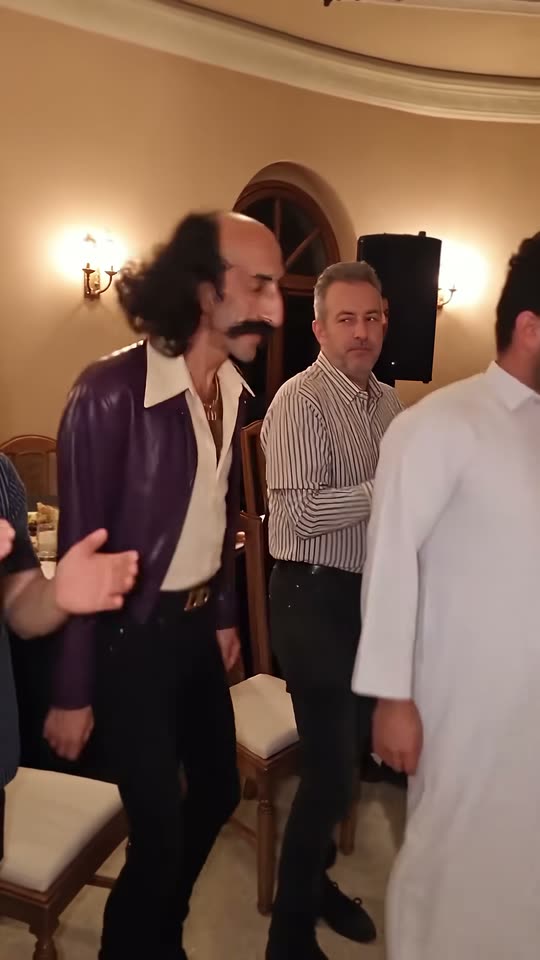
From the clapping line to the open floor
The opening places the lead beside a row of reacting guests in a warmly lit hall. Loose knees, rolling shoulders and a swaying walk carry the subject along that line before the action becomes larger: jumps, kicks and turns on the space in front of the speakers. The handheld party viewpoint makes it feel like an impromptu performance rather than a stage show.
The intended identity change centers the dancer, not every guest. Review whether the face and hair remain coherent through the faster moves and whether surrounding people stay distinct. A warm hall with the right windows is only the setting; the transition from smooth walking to energetic bouncing is what makes the reference recognizable.
What the PartyViral and BalliBotMogis names mean
These names come from tutorial captions rather than a formal dance syllabus. People also search for party viral dance, partyviral dance or the funny swaying AI dance. The exaggerated name does not mean a robot appears, and it does not add a second scene or a different music style to the current choice.
The actual Smew offering is one Human version with one portrait slot. Use the credited scene to confirm you found the dance you saw, then review the model and credit information below. A tutorial’s app name or promotional language is not proof of a separate feature in this template.
The current Smew options are listed below. The photo count belongs to the selected version: an extra person in a single upload is not a substitute for an additional photo slot. The model name describes how the output is made; it does not promise identical faces or motion on every run. Review the selected option and credit total on Create before submitting.
| Choice | Photos | Model | Output | Credits |
|---|
| Human | 1 | Seedance 2.5 | 12 seconds, 9:16, 720p | 183 |
Sound: these choices produce the template soundtrack, added separately to the finished video. Sound heard in a credited reference is not automatically included in every Smew option. If you add platform music later, choose it from that platform’s available library and check the intended use; generating a video does not transfer music rights.
The cultural origin deserves a careful description
The linked sound post comes from an Iraqi account, and the comment discussion connects the movement with hosa from southern Iraq. It is useful context, but a comment is not enough to establish the exact place, first performer or cultural meaning of the whole routine. This page therefore keeps that attribution separate from the observable action.
What you can see is a swaying walk and a bouncy party-floor performance. The AI trend recasts that action with new identities. Treat your result as a generated interpretation of a referenced scene rather than a claim that you performed an authentic cultural dance or attended a documented celebration.
Why the strange movement works as an AI meme
The humor comes from contrast. A familiar face can remain composed while the body moves with unexpected looseness, and the guests’ reactions make it seem accepted inside the party. A neutral portrait can be enough because the dance supplies the exaggeration; there is no need to make a silly face in the input.
The result is closer to a repeated scene with a new lead than a challenge where everyone learns and films their own steps. A concise personal caption can make that clear. Keep the AI label when sharing, and do not present the clip as an authentic record of a real party performance.
Fast turns, reference hair and duplicated identities
Check the lead during a jump or spin, when the face is smallest or blurred. A clear recent portrait is a better starting point if the model falls back toward the reference dancer’s hair or facial features. Show enough of your own hair and clothing for those cues to be visible.
If a guest inherits your face, the model has spread the identity beyond the intended lead. A one-person input helps reduce ambiguity but cannot guarantee a perfect crowd. Inspect the whole take before posting, including body contact and hands near the lens. Another generation is a new paid attempt, so change a weak input or make a deliberate choice rather than assuming repetition alone guarantees improvement.