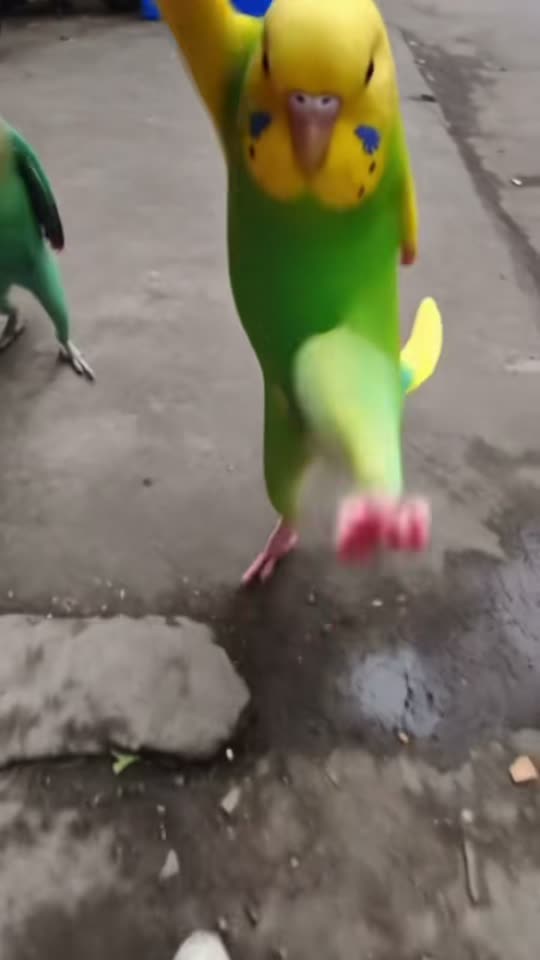
The low-camera sequence and alternating kicks
The starting pair establishes who is on each side before the first approach. One performer moves toward the low camera and throws an oversized kick, then the other answers. Later approaches can become quicker and closer until a face or body fills more of the frame. The camera relationship matters as much as the leg action: it should feel like a playful near miss, not a realistic assault.
The pet version uses an upright animal interpretation of that reference rhythm. Human choices create their own scene from the cast. Exact timing, hands near the lens and small foot details may vary, so inspect the whole exchange. A clip that looks convincing at a distance can still lose the face or body shape when the subject comes close to the camera.
Three input modes, two different audio paths
Duo is useful when each adult has a separate source photograph. One photo preserves the intended pair from a shared image, with the person on the left supplying the left starting role. Both produce 10-second videos with model-generated audio for 126 credits.
Two pets has two individual animal slots and a 12-second reference-driven recipe at 183 credits. Its soundtrack is added separately to the completed picture. All options are 720p and vertical 9:16. Choose the mode that matches your source material rather than treating one combined image as interchangeable with two unrelated portraits. The number of uploads and the audio method are part of the configured version, not settings inferred later from a caption.
When a close approach changes the face or species
A face that is tiny in the upload can become very large during a near-lens approach. Start with sharp, well-lit photographs so the model has usable detail for that moment. In Duo, provide clearly distinct people and confirm the slots. In One photo, avoid a pair where one face is much farther from the camera.
For Two pets, check that a non-bird remains recognizable rather than inheriting parrot-like features from the reference idea. Visible ears, muzzle, coat and paws give the model more identity information. Also inspect the kicks for merged legs or inconsistent sides. No source guarantees exact action; a clearer photograph can improve the starting point, but a reference is not a promise of perfect physical continuity.
Adding a caption and choosing publishing sound
A short caption about your friendship, household or pet pair gives viewers a reason for the otherwise absurd camera attack. Leave the faces visible and avoid text that suggests a real confrontation. An AI disclosure is especially useful when using recognizable people, even though the action is deliberately exaggerated.
The human modes enable generated audio; Two pets uses its reference soundtrack. Neither arrangement grants automatic rights to every track called Bing Bing Bing or phonk in a search result. Listen to the saved file and, if needed, choose an appropriately permitted sound through your publishing platform. Relevant trend identifiers can help describe the clip, but changing tag totals are not a guarantee that it will be discovered.