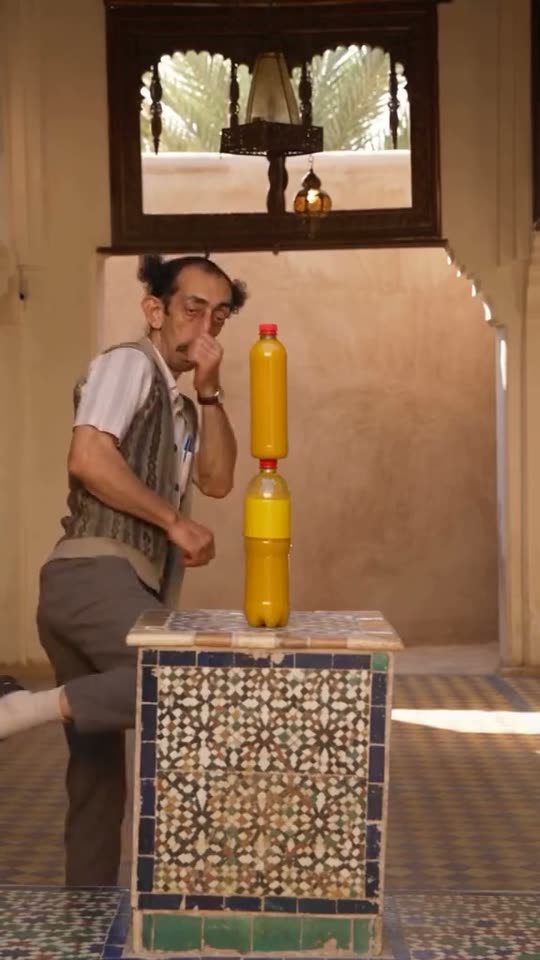
The long preparation and the short failure
The fixed-camera staging lets the viewer see the lead, bottles and support together. The subject begins in a focused stance, raises a knee and makes several exaggerated practice moves. That delay builds the expectation of a precise trick. The actual kick then sends the bottles flying and disrupts the setup, turning the preparation into the punchline.
Human and Pet follow related comic structures, but their bodies and endings are interpreted differently. Check whether the kick and falling objects connect in the generated take; a bottle disappearing before contact can make the joke confusing. The source identity should still be recognizable when the body turns or moves away, though the fast action may briefly blur details.
Bottle kick is not the same as bottle-cap challenge
A bottle-cap trick aims to remove a cap with a controlled spinning kick. The stacked-bottle challenge instead concerns moving one bottle while leaving the rest of the arrangement standing. This AI scene exaggerates failure: confidence and elaborate preparation end in a much bigger disturbance than intended.
That distinction helps when choosing a template from search results. If you want a careful cap-unscrewing demonstration, this is a different visual joke. The current Human and Pet choices both use a referenced failure scene, with one identity photo each. Their equal duration and price do not make them instructional martial-arts footage.
The current Smew options are listed below. The photo count belongs to the selected version: an extra person in a single upload is not a substitute for an additional photo slot. The model name describes how the output is made; it does not promise identical faces or motion on every run. Review the selected option and credit total on Create before submitting.
| Choice | Photos | Model | Output | Credits |
|---|
| Human | 1 | Seedance 2.5 | 10 seconds, 9:16, 720p | 152 |
| Pet | 1 | Seedance 2.5 | 10 seconds, 9:16, 720p | 152 |
Sound: these choices produce the template soundtrack, added separately to the finished video. Sound heard in a credited reference is not automatically included in every Smew option. If you add platform music later, choose it from that platform’s available library and check the intended use; generating a video does not transfer music rights.
The animal version uses its own visual reference
Pet gives a dog or cat a stylized upright stance and a small martial-artist attitude. The front paws act like guarded hands while a hind leg performs the comic kick. The point is recognizable animal markings in an impossible performance, not a demonstration of real training.
A whole-body image helps preserve proportions better than a tight muzzle crop. Check ears, coat pattern and paws after the movement, especially if the reference cat’s markings seem to return. The animal scene still uses a single identity slot; adding a second pet in the same photo does not create a two-animal challenge.
Look at contact, clothing and the final reaction
A face may weaken during a quick turn, and a reference hairstyle or moustache can reappear if the upload gives little usable detail. Use a sharper recent image showing the normal face and hair. If clothing matters, make it visible in the input instead of relying on a cropped headshot to communicate it.
Also inspect the bottle labels, foot or paw contact and the support tipping over. The intended props are generic; an accidental brand mark is not a customization feature. Review the complete clip before posting. You can make the joke through AI without attempting a real kick into a hard box or encouraging a pet to imitate the scene.