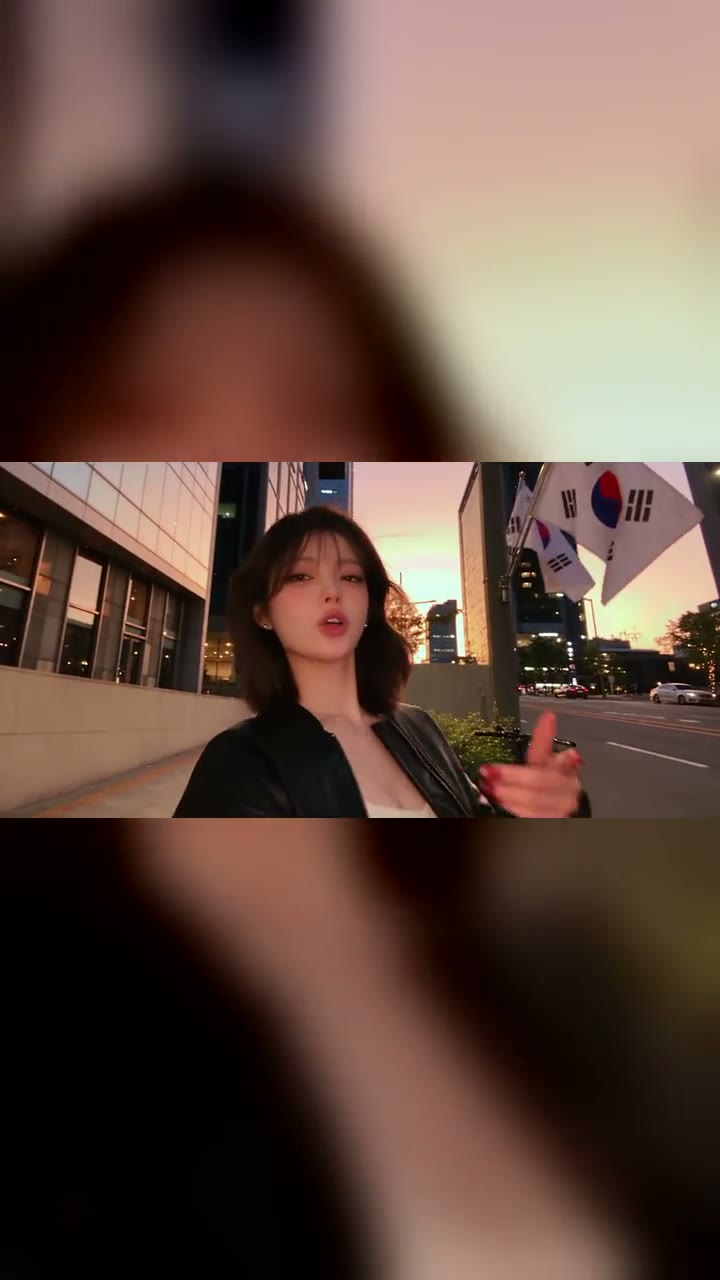
How the sunset selfie sequence is staged
The wide group shot establishes three friends on an urban sidewalk at sunset. The edit then moves closer to the center person, across to the right, and over to the left before returning its attention to the lead. Pointing, swaying, a wave and small expressive gestures keep the sequence playful; this is a camera-facing sing-along rather than a continuous full-body dance demonstration.
Solo replaces the center role while the other reference roles remain. Duo changes the center and left roles. Trio supplies all three identities. The quick hand-offs are also where face detail can become less stable, so review the turns as well as the opening group frame. Expect the model to interpret hair movement, clothing and facial expressions rather than reproduce every pixel of the sample. A strong first frame alone does not tell you whether all three solo moments worked.
Choose the cast before choosing your photos
Solo is the simplest way to try the group format: one person becomes the recurring center lead. Duo suits a pair who want separate moments without filling every reference role. Trio gives a friend group the complete cast, with the order of the uploads deciding placement. The number of photos changes who appears; it does not change the wide 15-second format of these three choices.
Do not put three faces into one image to simulate Trio. Each slot is an identity reference, and a group photograph can leave the model uncertain about which person belongs where. If your priority is the galloping move rather than the selfie edit, switch to Horse dance or Pet instead of expecting the group scene to change choreography. The options below show the actual Smew outputs, including the different frame shapes and soundtrack handling.
The current Smew options are listed below. The photo count belongs to the selected version: an extra person in a single upload is not a substitute for an additional photo slot. The model name describes how the output is made; it does not promise identical faces or motion on every run. Review the selected option and credit total on Create before submitting.
| Choice | Photos | Model | Output | Credits |
|---|
| Solo | 1 | Seedance 2.5 | 15 seconds, 16:9, 720p | 228 |
| Duo | 2 | Seedance 2.5 | 15 seconds, 16:9, 720p | 228 |
| Trio | 3 | Seedance 2.5 | 15 seconds, 16:9, 720p | 228 |
| Horse dance | 1 | Seedance 2.5 | 10 seconds, 9:16, 720p | 126 |
| Pet | 1 | Seedance 2.5 | 10 seconds, 9:16, 720p | 152 |
Sound varies by choice. Solo uses the template soundtrack, added separately to the finished video. Horse dance uses sound generated with the scene, rather than a promised copy of a social-platform recording. A reference clip’s audio is not evidence that every option includes it. Music rights remain with the rights holders.
The horse dance is a separate ten-second idea
Horse dance returns to the crossed wrists, bouncing knees and imaginary reins associated with the original routine. The setting is a rooftop around sunset, with side-to-side movement and a lasso-like arm gesture. It is made from your photo without the group selfie reference, so it should not be judged against the trio’s camera hand-offs.
Pet uses a kitchen dance reference. The animal rises into a stylized upright pose, crosses its paws and bounces through the recognizable gallop. A full-body pet image helps establish leg length, fur pattern and proportions; a very tight face crop leaves more of that anatomy to invention. Neither choice asks you or your pet to perform the action. They are generated scenes, and paws, hands and rapid limb motion deserve a careful look before posting.
Sound, framing and a caption that fits the joke
The selfie choices are wide because their reference needs room for three people and the camera hand-off. Leave that framing intact when it explains the joke; an aggressive vertical crop can remove a friend’s solo or the group’s reactions. Horse dance and Pet already use a vertical frame. If you place a wide result inside a vertical social post, check the platform preview before publishing.
Solo, Duo, Trio and Pet have separately supplied template audio. Horse dance uses generated scene audio rather than the reference song, so choose a platform recording separately if you want that specific music. A credited reference having music is not a promise for every version. Captions such as “Our group chat finally went outside” or “My cat has been rehearsing” explain your personal twist. A few relevant tags, such as #GangnamStyle and #AIDance, are clearer than an unrelated wall of hashtags. Music availability and commercial-use rules still belong to the publishing platform and rights holders.
Check the role changes, not just the opening frame
If someone looks like a reference performer, use a clearer recent photo with the full face and hair visible. If the identities blend, confirm there is only one person in each upload and that the slot order is correct. Moving the same blurry image to another slot will not provide missing detail. A second attempt is a new paid generation, so change the input or choice for a reason rather than repeating blindly.
During whip-pans, a brief blur can be part of the camera movement, but the next settled shot should still make sense. Check for unexpected hair, hats, makeup, duplicated faces and changes in clothing between solos. For Pet, inspect the crossed paws and hind legs; for Horse dance, inspect the hands around the imaginary reins. The template directs the action, while the model still has to draw each frame, so no prompt can guarantee flawless choreography or an exact likeness.