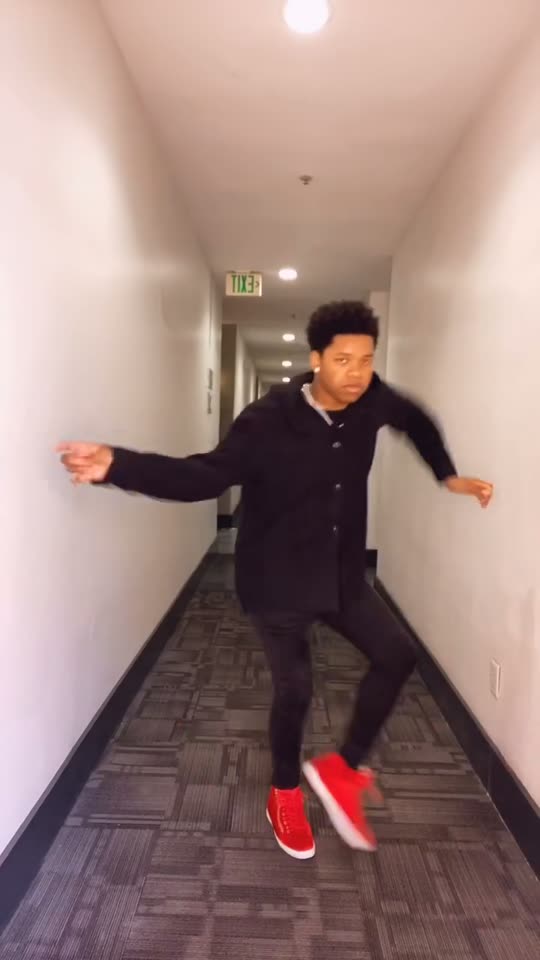
Mansion styling or movement in your own space
Mansion combines the slide with a formal interior, a grand-piano atmosphere and a dark dressed-up look. It is a thematic interpretation rather than a copy of a real artist's house. The uploaded subject is intended as the only identifiable dancer, while the reference gives the sequence of foot lifts, slides, leans and arm accents.
Your place changes that relationship. The standing source image supplies the location and outfit, so a clear floor, visible feet and room at the sides matter. It is the better fit when a familiar personal setting is part of the joke. Neither option requires a clip of you performing the routine.
The current choices both run for 14 seconds at 720p in vertical 9:16 with Kling 3.0 Motion Control. Mansion is 59 credits and Your place is 57. The configured reference soundtrack is joined after picture generation and saved into the completed result.
Costume, floor contact and identity should still be checked. A hand swing can change a glove, or a turn can alter facial resemblance. The scene and movement are guidance for a new generation, not a guarantee that every accessory or camera position exactly matches the source.
The recognizable steps and their background
The routine's identity comes from alternating sides: one foot lifts while the other slides, then the action reverses. Arm movements, a lean, a dip and a relaxed approach to the camera give it more personality than a simple repeated foot exercise. The connection between musical cues and visible steps helps viewers identify it quickly.
The dance name connects to Toosie and the choreography background around the 2020 song. Social covers interpret the movement in different rooms, corridors and outdoor spaces. A mansion-themed AI version is one interpretation of that history, not a new official choreography or a claim that the uploaded person worked with the artists.
You do not need a tutorial to use this template because motion is already provided. A tutorial serves people who want to physically learn and film the steps; the generated result instead imagines the supplied identity performing them. Keep that distinction clear when sharing.
The saved soundtrack remains subject to its owners' rights. A familiar dance or older challenge does not give blanket permission for advertisements or paid posts. Check how the destination handles embedded music and any licensed platform sound you choose separately.
Checking feet, identity and formal details
Foot contact matters in a sliding dance. Watch whether the shoes stay grounded and whether alternating sides remain readable, especially near the edges of a source-photo frame. Your place can look weak or cut off when the input is seated, tightly cropped or obstructed by furniture. A full standing image is the practical first improvement.
Mansion adds details such as gloves and formal clothing that can change during the arm swings. An unexpected chain, shoe color or reference-like accessory may appear even when the opening looks right. Check the complete routine, including the approach toward the camera, rather than relying on a still preview.
A sharp frontal face helps recognition, while clear hair and clothing reduce ambiguity about appearance. Motion can still blur arms or change small features. Another generation may differ without guaranteeing that one accessory or step will be repaired.
For posting, an original caption about an unlikely formal entrance or a familiar room becoming a dance floor is enough to establish the joke. Keep the AI disclosure and subject's consent. Descriptive dance tags identify context; changing hashtag totals are not a promise of reach or quality.