No Guidance dance: A solo train-aisle routine or a two-person dance edit.

Create the No Guidance dance with your own face, or assign two people to the duo version. The chosen scene determines the upload roles and the listed clip length.

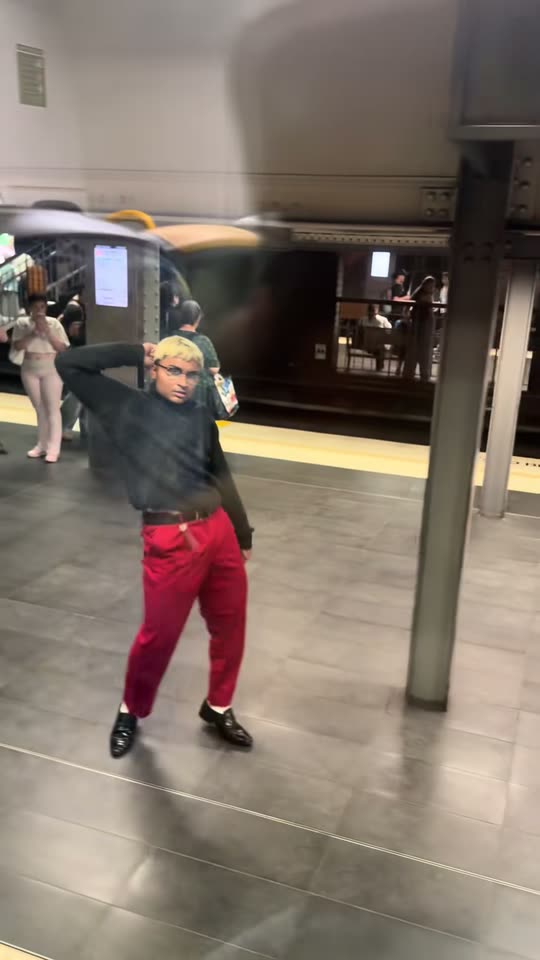
The original No Guidance Dance reel by @zacjeremiahOriginal reel
  • 1–2 photos depending on version
  • 11–12 seconds
  • Price shown before generating

No prompt to write: Add your photos and tap once

Create your own

Ready in a few minutes · From 168 credits

A train begins to leave, but the dancer on the platform keeps performing for the camera behind its window. The No Guidance train edit combines smooth hip movement, hands behind the head and direct eye contact with an audience that is literally moving away. The setting gives a familiar dance a new comic perspective.

Smew's Solo choice follows that platform idea with one adult photo. Duo moves to a side-by-side living-room routine with two adult uploads. Solo is 11 seconds and Duo is 12 seconds, each vertical with a configured reference soundtrack. You supply the identities, not a recording of yourself learning the choreography.

Example

Preview the No Guidance dance format

Visual references explain the format. Generated details and timing can vary.

Solo visual reference
A format reference, not a Smew customer result.
Use this reference
Duo visual reference
A format reference, not a Smew customer result.
Use this reference
Step by step

Make your No Guidance Dance video

Choose a version, add the required photos and check the displayed credits before generating.

  1. Pick the setting and cast

    Choose Solo for the train-platform scene or Duo for a two-person room routine. Add one adult per photo. In Duo, the first image belongs to the left dancer and the second belongs to the right.

  2. Review the selected duration

    Solo currently costs 168 credits for 11 seconds; Duo is 183 credits for 12 seconds. Both use Seedance 2.5 at 720p in vertical 9:16. The routine and camera instructions are already included, with no prompt or dance footage required.

  3. Review the movement and song

    Dashboard tracks the task while it processes. The configured soundtrack is joined before completion, and Library plays the saved file. Watch faces, clothes, arm positions and partner assignment through the whole dance before downloading.

Choose a photo that keeps the subject recognizable

Use a sharp front-facing image with clear eyes and even light. A knees-up or full-body photo gives useful outfit and proportion cues, while a recognizable face remains important because the Solo dancer can be small in the moving train-window composition. Avoid sunglasses, masks and heavy beauty filters.

For Duo, supply two separate images with one adult in each. Different outfits can make the left and right roles easy to track. A couple or friendship group photograph is not a substitute for the two assigned slots, and a second person in the background can confuse identity.

Use yourself or adults who have agreed to the dance depiction. There is no need to pose on a station platform or perform near a departing train for the upload. An ordinary safe portrait provides the identity; the scene and apparent performance are generated.

Where the format comes from

No Guidance is the 2019 Chris Brown song featuring Drake. Its official video and later social remixes sit behind several related dance formats. The Ayzha Nyree remix is associated with a TikTok challenge, but the same song title can lead to different choreographies, reactions and edits.

The train-platform variation is illustrated by Sydney creator @zacjeremiah, whose October 2026 post is filmed from a departing train. Other AI promotions use a dancer inside a carriage or aisle, which can look similar in search results while using a different scene. Smew's Solo reference is the platform interpretation; Duo is a separate room-based routine.

These examples explain the setting and music context without claiming that every No Guidance clip comes from one creator or one template. Smew is a separate generation workflow and does not require a CapCut project. The source links credit background material rather than promise the original artist's appearance or endorsement.

  1. The original song provides the musical background for later dance interpretations.

  2. The Ayzha Nyree remix becomes associated with a separate social dance challenge.

  3. A street-corner duo is another example of the song's continuing dance use.

  4. A platform performance filmed from a departing train supplies a specific setting reference. Credited example

  5. AI-template promotions also use carriage and aisle variations, which should not be confused with the platform scene.

  6. Dedicated photo-to-video templates offer new takes on the familiar dance format.

Copy and paste

The recipe behind the result

The template applies its configured instructions. No prompt writing is required for this flow.

Solo

1 photo: you, face clearSeedance 2.511 s · 720p · 9:16168 credits
Video prompt

Render a photorealistic 9:16 sequence using [Video 1] as the visual guide. The lead dancer is [Image 1], preserving that adult’s own face, hair and chosen clothes. Follow the reference camera, scene continuity, relative action timing and cuts unless the scene instructions below explicitly change the setting. Keep the train-aisle setting, aisle perspective and camera movement from [Video 1]. Follow the lead’s steps, knee bends, upper-body rhythm, arm gestures, turns and expressions through the complete provided segment. Retain seated background passengers as separate identities rather than giving them the uploaded face. Ground each step on the carriage floor and keep the aisle geometry stable as the camera moves. End with the same pose and camera cadence as the reference rather than creating another location. Keep each uploaded identity distinguishable through every view: consistent face structure, complexion, hair, age and build. Never transfer a target face onto another body. Retain the selected outfit rules rather than reverting to the reference performer. Change only the assigned performers, leaving other roles and props coherent. The soundtrack is handled separately: match visible mouth shapes and rhythmic gestures to the reference performance without generating a recording, sung words or dialogue from it. Add no unrelated people, extra body parts, captions, signatures or watermarks.

1413 characters

Duo

2 photos: you, on the left + your friend, on the rightSeedance 2.512 s · 720p · 9:16183 credits
Video prompt

Render a photorealistic 9:16 sequence using [Video 1] as the visual guide. [Image 1] is the left dancer and [Image 2] the right dancer; maintain these two distinct identities throughout. Follow the reference camera, scene continuity, relative action timing and cuts unless the scene instructions below explicitly change the setting. Use the two-performer reference for synchronized steps, upper-body gestures, turns, expression timing and spacing. Follow the original camera and location, keeping any unassigned background participants unchanged. Both targets retain their own uploaded hair, clothing choices and proportions. Prevent faces switching bodies when the dancers approach or cross, and keep separate arms and legs during the shared routine. Preserve the reference opening, continuous dance progression and closing beat. Keep each uploaded identity distinguishable through every view: consistent face structure, complexion, hair, age and build. Never transfer a target face onto another body. Retain the selected outfit rules rather than reverting to the reference performer. Change only the assigned performers, leaving other roles and props coherent. The soundtrack is handled separately: match visible mouth shapes and rhythmic gestures to the reference performance without generating a recording, sung words or dialogue from it. Add no unrelated people, extra body parts, captions, signatures or watermarks.

1424 characters

Models, duration and credit cost

You pay in credits. The Generate button shows this price before you spend anything. These are the options on this page.

OptionModelWhat you getCredits
SoloSeedance 2.511 s · 720p · 9:16168
DuoSeedance 2.512 s · 720p · 9:16183

One-time packs and plans are on the pricing page. A failed video gives its credits back.

Two routines with different camera relationships

Solo starts with the performer arriving in the platform view as the train moves. Hands behind the head and wide elbows make the hip movements easy to read. A head touch, knee lift and turn add variation before the dancer faces the camera again. The passing platform structure and window viewpoint make the spectator feel briefly involved in the performance.

Duo uses a room rather than railway movement. Both dancers begin together, then move through hand waves near the face, shoulder rolls and small steps. A flexing or laughing moment gives the pair character before hand rolls and side steps finish the take. The left/right identity assignment matters more than the Solo scene's moving point of view.

These are not interchangeable casts in an otherwise identical clip. Solo currently lasts 11 seconds, while Duo lasts 12. Both use 720p vertical 9:16 output and the configured reference soundtrack, but specific motions, expressions and synchronization can change. Review the reference for the setting you want rather than choosing only by the shared song title.

A train-platform performance versus an AI aisle filter

The train setting can describe several things. In the platform reference, the dancer stays outside and the camera leaves with the passengers. That separation creates the comic confidence of performing for people who cannot stay. An aisle version instead places a dancer within the carriage and often appears in face-replacement promotions.

Smew's Solo follows the platform idea. It does not ask you to film a train journey, capture commuters or paste a famous face into an existing edit. The uploaded adult supplies identity, while the saved scene recipe supplies the environment and routine. Duo is for two identifiable people in a room, not two platform performers.

CapCut and other editing tools may have templates under the same title, but their presence in search results does not establish the output or settings here. Use the live Create options and supplied visual references to compare. If your goal is to learn and physically perform choreography, a step-by-step tutorial is more appropriate than an AI generation workflow.

Music context and posting a recognizable dance

The original song is No Guidance by Chris Brown featuring Drake; the social challenge is also associated with the Ayzha Nyree remix. The exact reference soundtrack belongs to the selected recipe. Smew handles that sound separately from picture generation and saves the completed video with audio, rather than asking the model to compose a new song.

Track recognition does not transfer music rights. Check what your destination platform permits for an embedded recording, particularly for business accounts, paid promotion or an advertisement. A platform's licensed sound library may have different terms from uploading an MP4 that already contains music.

A short original caption can explain why you are still dancing as the train leaves, or what makes your pair's routine funny. Keep the AI disclosure and the subjects' consent. Relevant song and dance tags can identify the clip, but a hashtag's changing totals do not predict how your take will perform. The strongest context is the scene itself and the clear difference between fictional generation and a real public performance.

Holding identity through motion and distance

In Solo, the dancer can be distant and partly affected by reflections or passing pillars. A tiny face in the output does not automatically indicate an upload problem, but a sharp portrait gives the model better information than a blurred or filtered source. Inspect the moments when the head turns and looks back toward the lens.

If the character acquires the reference's hairstyle or trouser color, supply a photograph that shows your own hair and outfit more clearly. For Duo, check whether left and right remain distinct through shoulder rolls and hand movements. Separate single-subject photos are more useful than trying to extract two identities from a crowded image.

Hands behind the head, raised knees and close partner motion can introduce extra fingers, unstable limbs or face blending. Watch the complete take before sharing. A clearer image may help a future attempt, but another paid generation does not guarantee a specific repair. Use the setting as a fictional dance scene, and do not stage a risky railway recording to make the input more realistic.

FAQ

No Guidance Dance questions

What is the No Guidance dance?

The name covers social routines set to No Guidance and its remix versions, with smooth hip movement and recognizable arm gestures. The train-platform interpretation adds a dancer performing for a departing camera. Smew offers that Solo scene and a separate Duo room routine, rather than one universal choreography for every use of the song.

How do I make a No Guidance dance AI video?

Choose Solo or Duo, add one adult per photo slot and review the cost before starting. Solo is currently 168 credits for 11 seconds; Duo is 183 credits for 12. The routine instructions are included. Follow the task from Dashboard and review the finished file in Library.

Can I do the No Guidance dance with a friend or my partner?

Use Duo with two separate consenting adult photos. The first image guides the left dancer and the second guides the right. It follows a side-by-side room routine, not the Solo train platform. Clear faces and distinct visible outfits help preserve the two identities through the shared movement.

Is this the No Guidance train dance?

Yes, it is the platform interpretation associated with the credited @zacjeremiah reference. The camera looks from the departing train toward the performer outside. That differs from an aisle or airplane-cabin edit that may appear under similar search terms. Your uploaded adult is intended to take the central role.

Do I need a No Guidance dance tutorial first?

No. The photo supplies identity and the recipe supplies movement. You do not need to record a performance or upload dance footage. A tutorial is useful if you want to learn the routine physically, but the AI workflow creates an imagined performance rather than teaching or verifying your dance ability.

What song is the No Guidance dance, and where is the dance battle?

No Guidance is the 2019 Chris Brown release featuring Drake, and their official video contains a dance-battle context. TikTok routines are also associated with the Ayzha Nyree remix. Smew's template uses its selected reference soundtrack, not footage or an official appearance of the named artists.

Is the No Guidance dance meme the same thing?

The meme label often emphasizes a funny setting, unlikely performer or face replacement, while the dance label emphasizes choreography. They can overlap. This page creates a fictional AI dance with your supplied identity, so it can be shared as a playful reaction without pretending you actually performed for passengers.

Can I use a photo of a celebrity?

Use your own image or a consenting adult's photo. Famous-face edits in other services' promotions do not establish permission to reuse those likenesses. Keep an AI disclosure when publishing and avoid presenting the result as a real endorsement, performance or public appearance by anyone who did not agree.

Which AI models make the videos?

The current Solo and Duo choices use Seedance 2.5 at 720p in vertical 9:16. The configured reference soundtrack is joined after the picture is generated. Processing time varies, and the finished take can change fine details and timing. The model and output are shown with each option on Create.

What prompt does the No Guidance dance AI trend use?

No. The template includes scene and motion instructions for the selected choice. You provide the photo identities and confirm credits. The source choreography and reference posts are background; they are not proof that a creator shared or endorsed Smew's recipe. No prompt needs to be pasted.

How long is the video and what format is it?

Solo is 11 seconds and Duo is 12 seconds, both vertical 9:16 at 720p. The completed MP4 is saved with the configured soundtrack before it appears as finished. Review it in Library before sharing, including partner roles, faces, hands and clothing through the movement.

Try No Guidance Dance with your photos

Choose your version, review its output and credits, then start your own take.

No watermark. A failed video gives its credits back. Secure checkout by Stripe.