What happens before the second dancer arrives
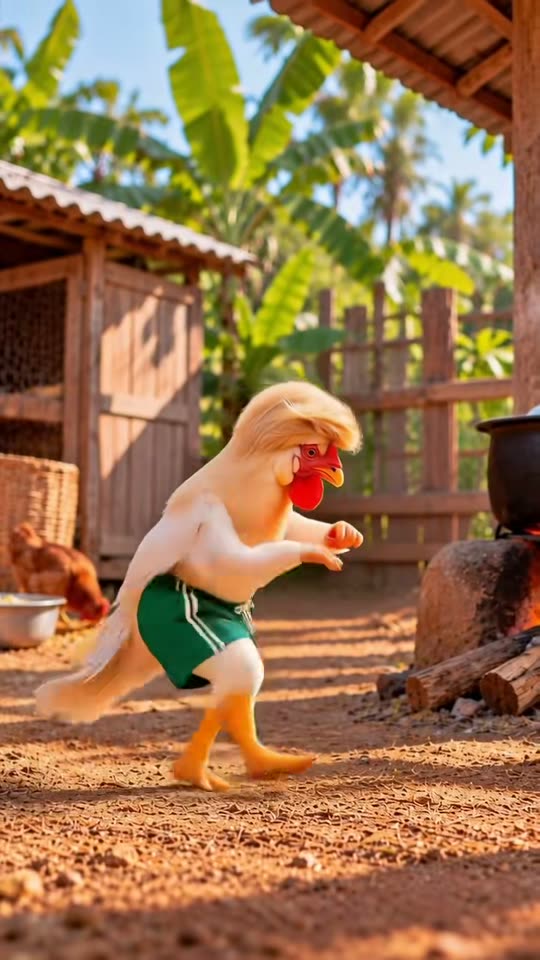
The first performer establishes the scene with a side-on sequence of stepping kicks. Bent wings behave like arms, adding short punches to the footwork. Red earth, a coop, greenery and the yard's other details make the implausible movement look grounded in an ordinary outdoor setting. A drifting viewpoint keeps the routine from feeling like a stationary sticker over a background.
As the hen turns more toward the camera, the pace continues rather than pausing for a portrait. The wider view and second performer's entrance change the joke from an unusually talented chicken to a coordinated pair. The last moments give the viewer time to read both characters dancing together.
The 10-second Smew recipe follows that solo-to-duo idea, but individual steps and the precise entrance can vary. Hen uses the same uploaded adult cues for both birds, Duo assigns each a separate photo, and Pet uses two interpretations of the supplied animal. Watch the entire finish: the paired identity and movement are as important as the first convincing frame.
Why a familiar dance becomes funny as a hen performance
The movement is not random flapping. The reference follows a real challenge with quick kicks and strong rhythmic accents, so viewers can recognize a dance they have seen people perform. Dressing the hen in a human hairstyle and clothes makes it look like an overconfident participant rather than a naturalistic farm animal.
The second entrance adds surprise. It gives the impression that the first dancer has found a partner who already knows the routine. Viewers can compare the two performers' outfits, timing and expressions, which makes the same short scene work as a friendship or partner joke.
The source examples connect the format to West African dance and AI-animal feeds. That context is more useful than repeating a temporary view count or claiming everyone in a country uses the effect. Your own version can focus on an identifiable outfit or pet marking, with an AI label that keeps the cultural reference and impossible animal performance in the right perspective.
Becoming a hen, bringing a friend or casting a pet
Hen is not intended as a photoreal human face pasted onto a bird's head. The hairstyle and clothing provide the personal resemblance while the character remains a hen. A vivid jacket or familiar braids may carry the joke even when facial details are deliberately bird-like. The matching second hen follows the same identity cues.
Duo changes the casting. Photo one guides the opening performer and photo two guides the arrival, so use distinct, separate images. It is a useful choice when the joke depends on two people recognizing their own outfits rather than seeing identical twins. Both adult subjects should agree to the depiction.
Pet changes the performer to the uploaded animal identity and duplicates it for the paired finish. Show the whole animal so the model has more than a close muzzle to work with. The setting and choreography still come from the recipe. None of these choices requires real dancing footage, and all currently share the same 152-credit, 10-second output rather than adding a separate cost for a second character.
Music and a caption that explains your version
The recipe uses the reference dance soundtrack after picture generation and saves the final file with sound. That keeps the music handling separate from the model's task of drawing movement. The track's presence does not grant ownership of the recording or establish permission for every advertisement, brand account or sponsored post.
Choose a caption that explains the new casting: your usual outfit on a feathered dance partner, a friend's unexpected entrance, or a pet who has apparently mastered the routine. You can mention the challenge or hen format without copying comments or lyrics from a source post. Clear AI labeling prevents the realistic yard from being mistaken for a real animal stunt.
Descriptive dance and AI-animal tags can identify the format, but no tag guarantees distribution. If you want a different dance or a different cast size, browse another template's actual inputs rather than expecting a caption to change this recipe's motion or roles.
Keeping the costume and character consistent
A reference-like blonde wig or green shorts can appear when the upload does not clearly show a different identity. A waist-up or full-body photograph with visible hair and clothing supplies stronger guidance than a close selfie. For Duo, similar source outfits can make two characters hard to tell apart even when the slot order is correct.
A literal human face on the hen changes the intended joke. If that happens, consider whether your upload overemphasizes the face while omitting the hairstyle and outfit. For Pet, inspect whether a bird beak, comb or other reference feature remains where the animal's own face should be. Distinctive coat markings and an unobstructed full-body view are useful checks.
Fast stepping can produce crossed feet, extra limbs or unstable wings. Review both the solo and side-by-side finish before sharing. A better image may help a subsequent attempt, but a fresh generation is not a guaranteed repair for any one artifact. The goal is a readable, consensual AI parody, not an assertion that the photo subject really performed the challenge.