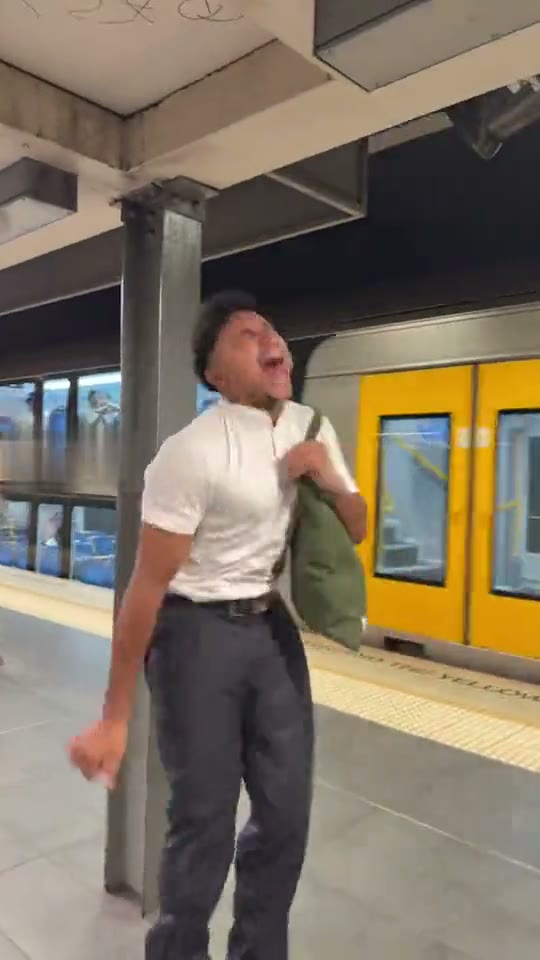
The missed connection and the dance afterward
The opening needs urgency: the subject comes down the stairs toward the platform as if there is still time. A camera turn reveals the doors closing just before arrival. That small failure is recognizable enough that the next exaggerated reaction feels like a visual version of what many travelers privately think.
The comic knee drop and momentary despair create a pause before the reversal. The subject stands, gives the lens a deadpan look and begins dancing on the platform. The final mood should be clearly different from the frantic opening, rather than looking like one continuous run.
The current 12-second recipe asks for that complete arc in vertical 9:16 at 720p. Details such as door movement, floor contact and the exact dance can vary. The model generates sound for the scene, with station activity and an upbeat finish as the intended direction, not a guaranteed reproduction of a specific sound recording.
What the one-photo scene generation does
The upload provides the central adult identity, appearance and clothing cues. The saved recipe provides the generic station, train, camera movement and sequence of actions. There is no second role to cast and no requirement to upload the original creator's recording.
Seedance 2.5 currently creates the 12-second video at 152 credits. The model also generates audio rather than using a configured original-song soundtrack. The finished result is saved for Library preview and download, while Dashboard lets you follow processing and browse other templates in the meantime.
The intended station is a fictional, unbranded environment rather than a faithful copy of a real operator's location. Inspect signage and clothing details because generated imagery can invent lettering or accessories. The result should not be used to claim a real incident, an operator's endorsement or an actual stunt performed by the uploaded person.
Why the train dance works as a reaction meme
A narrowly missed departure needs little explanation. The doors close, the disappointment is obvious and the subject briefly overreacts. The dance then answers the failure with a completely different attitude. That reversal lets a small transport annoyance stand in for many everyday setbacks.
Train-guy, missed-subway and missing-the-train labels can overlap in search results, but not every station dance follows this narrative. Some simply show choreography in a public setting; this recipe depends on the closed-door setup and recovery. Compare the actual scene rather than assuming every train-dance template has the same steps.
The source posts also use different social audio uploads. Smew's current output generates its own sound with the scene and does not promise one of those reposted tracks. You can choose authorized audio separately when publishing, but check the rights and align it with the mood change rather than relying on a title alone.
Sharing the joke and checking the fast movement
A short caption can describe a commuter who lost the schedule but found a reason to dance. Write it in your own words and keep the fictional nature clear. Tagging a consenting friend who is often late can be playful, but an AI clip should not be framed as evidence of their real behavior on a platform.
Review the face through the stair run and the body during the knee movement. Fast camera changes can obscure a hand or create an unstable limb, and the dance finish may reveal a clothing change not visible in the first seconds. A clear waist-up or full-body source helps, but a repeated generation is not a guaranteed fix.
Keep an AI disclosure and check any music added in a separate editor. Descriptive train and reaction tags can explain the context without a promise of reach. There is no need to recreate the scene physically: the joke works as an obviously generated version of an ordinary frustration.